The Qianwen version of the personal Agent is integrated into advanced glasses.
No need to speak or use buttons; you can start working automatically just by putting on the AI glasses.
Just now, Qianwen released the new generation of AI glasses, the N1 Pro.
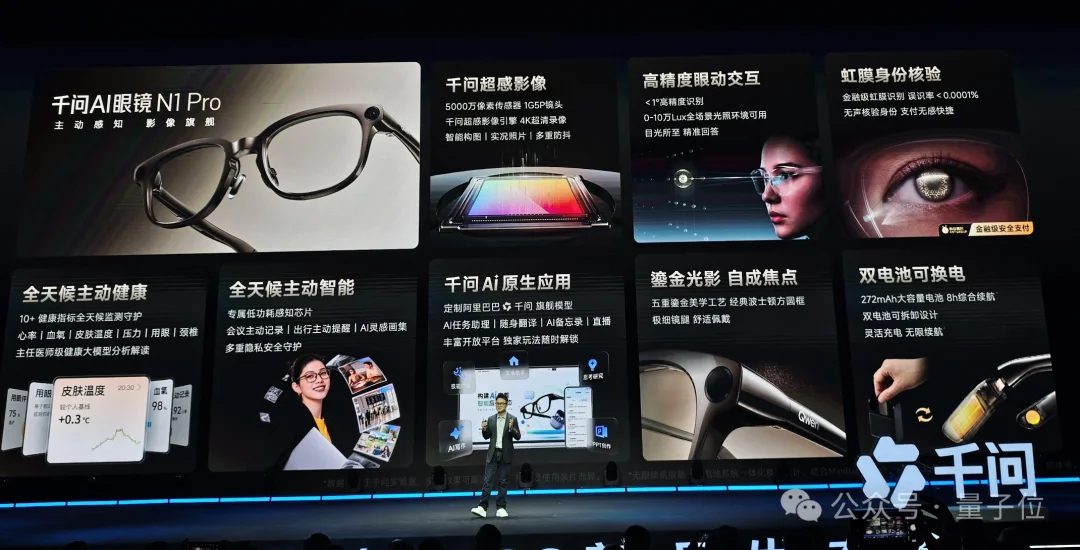
Unlike previous AI glasses, the N1 Pro doesn’t require you to give commands verbally. As long as you set it up in advance, it will continuously monitor your surroundings, determine what you need at the moment, and then take the initiative to assist you.
For example, as soon as you enter the meeting room, it knows that it should start recording.
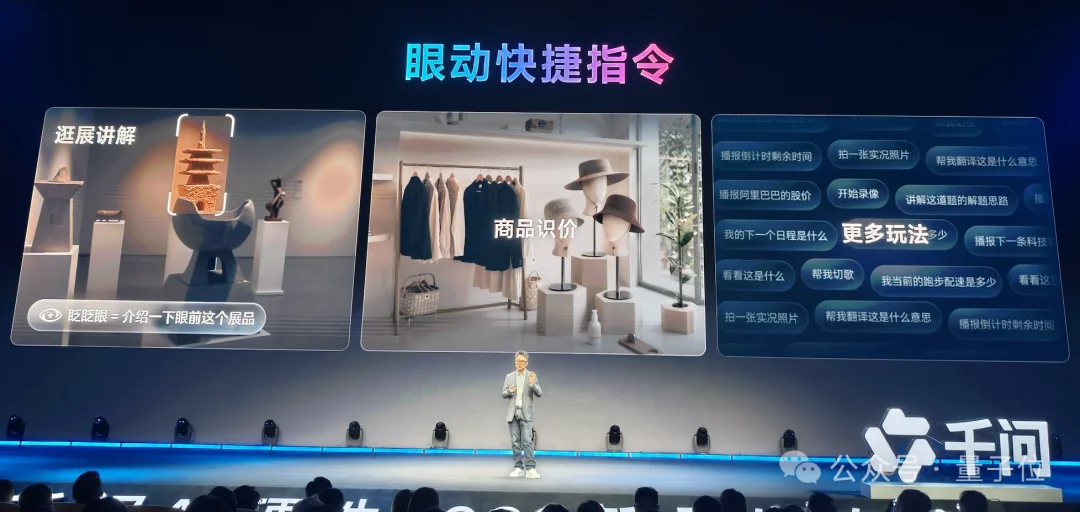
Based on this interaction logic, N1 also incorporates eye tracking technology. It allows users to navigate around the screen at the “word level” without using fingers at all—even blinking can be used as an instruction.
In addition, it is equipped with iris payment and health monitoring features, and the camera has a resolution of 50 million pixels, which is quite high among current artificial intelligence glasses.
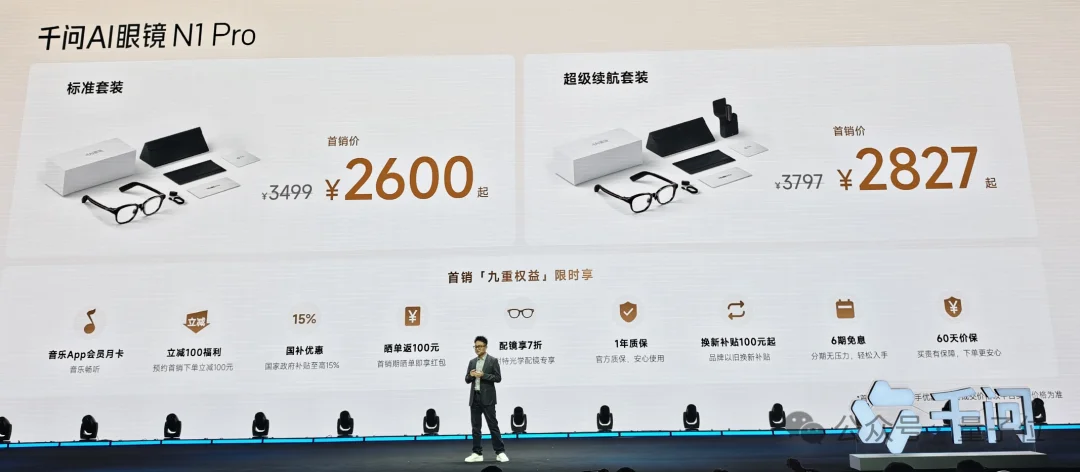
Such a “visionary” artificial intelligence glasses starts at just 2,600 yuan.
Put on the artificial intelligence that is currently working.
In the past, artificial intelligence glasses had one thing in common: before they started working, you had to shout loudly or press a button.
N1 Pro has changed this interaction logic.
It is equipped with an "all-weather visual perception system" that continuously uses a special chip to "observe" the surrounding environment.

The power consumption of this chip is only 5 milliwatts. It uses grayscale frames to determine the lightest environment. Once it detects clues that are worth further analysis, it will activate more powerful computing capabilities to process them.
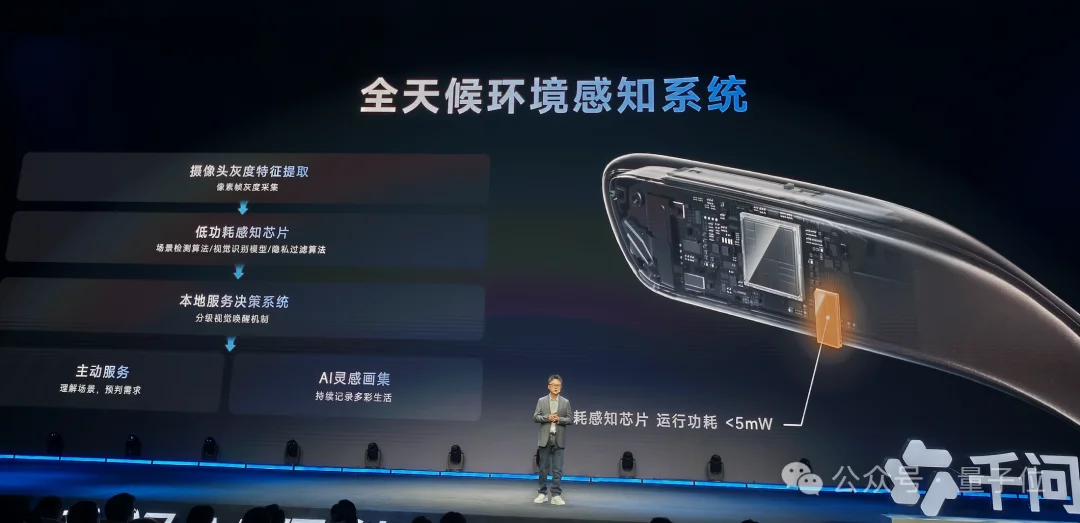
This mechanism might be used in the following way.
You bring your suitcase to the train station, and N1 Pro will automatically display your travel itinerary. When you pass through security check, it will tell you where the ticket gates are. When you board the platform, it will inform you of the number of carriages and seats available. You don't need to take out your phone at any point during the whole process.
And it won't keep reminding you; the same information will only appear in the nodes you need it once, and then it won't bother you anymore.

The meeting scenario is similar as well.
You pre-set the note-taking task on your glasses. When you enter the meeting room, N1 Pro determines that you are in a meeting based on visual and auditory cues, and it will automatically start recording.
Don't worry about suddenly realizing in the middle that you forgot to press the record button.

Of course, Qianwen has very strict permission controls. If you authorize it with travel information, it can read the orders; and once you open a transcription task, it will start recording.
N1 is used for critical operations such as sending messages and making payments. Pro only helps you prepare the options, and it’s up to you to decide whether to proceed with these actions or not.
"Blinking is a command"
Since N1 Pro is already capable of continuously monitoring the environment, the next step is to enable it to detect your eyes as well.
N1A set of eye tracking modules is hidden within the Pro's framework, with each module having an edge thickness of only 1.7 millimeters. It works together with infrared lights to steadily follow your gaze within a lighting range from 0 to 100,000 lux, with the accuracy in the central area controlled within 1 degree.
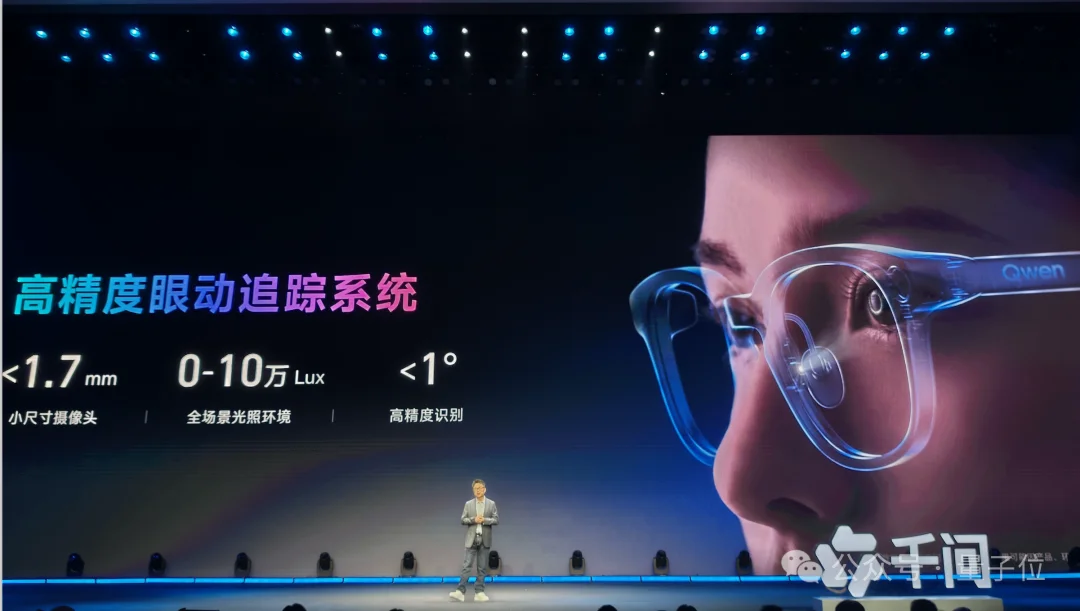
What's the use of 1-degree accuracy?
You point at the names of the dishes on the menu and ask, “How much does this cost?” N1 Pro really knows which one you are referring to.

Qianwen has also implemented rapid blinking operations on top of eye movement tracking; you can associate high-frequency actions with blinking commands.
You're too shy to talk in the museum, so just blink, and N1 Pro will know which exhibit you're looking at and start explaining it for you. When you're shopping and want to check the price of something, but it's inconvenient to make a sound because someone else is around, just blink, and it'll be taken care of. You can also combine photos and songs together.
Take one more step forward, and you'll reach the stage of identity recognition.
N1 Pro also supports iris recognition, allowing for iris-based payments through the use of glasses.
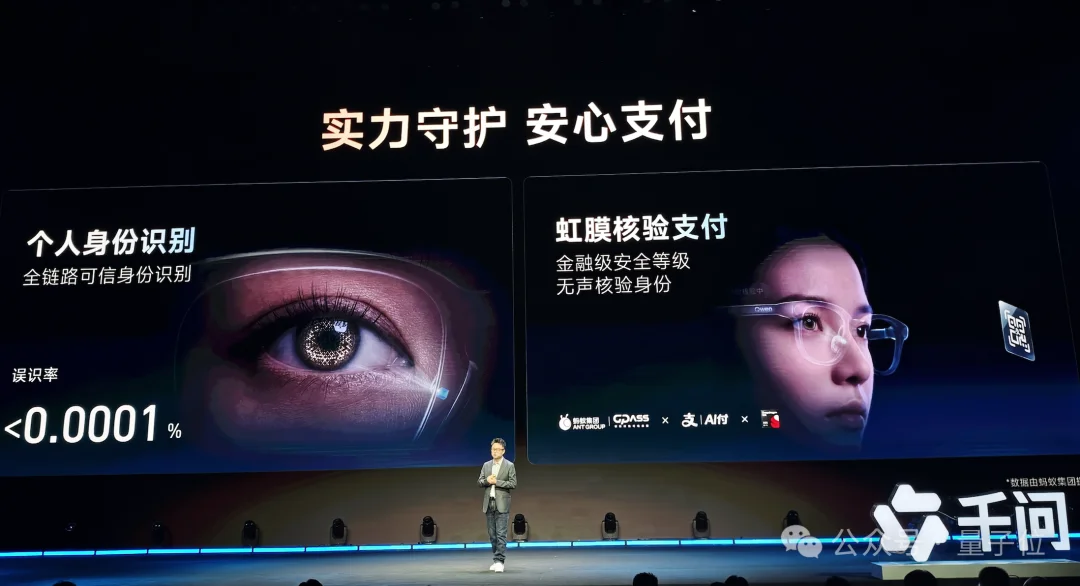
The difficulty with this issue lies in the fact that mobile iris recognition requires you to keep the screen still, but when wearing glasses on your face, your head is constantly moving, and the ambient light also changes significantly.
Dynamically extract the most distinct iris features, use multi-frame feature adaptive weighting fusion, and then dynamically correct the spatial positions of the two eyes, resulting in an error rate of less than one in a million.
The nasal brace can measure your heart rate; I’ll write a song for you.
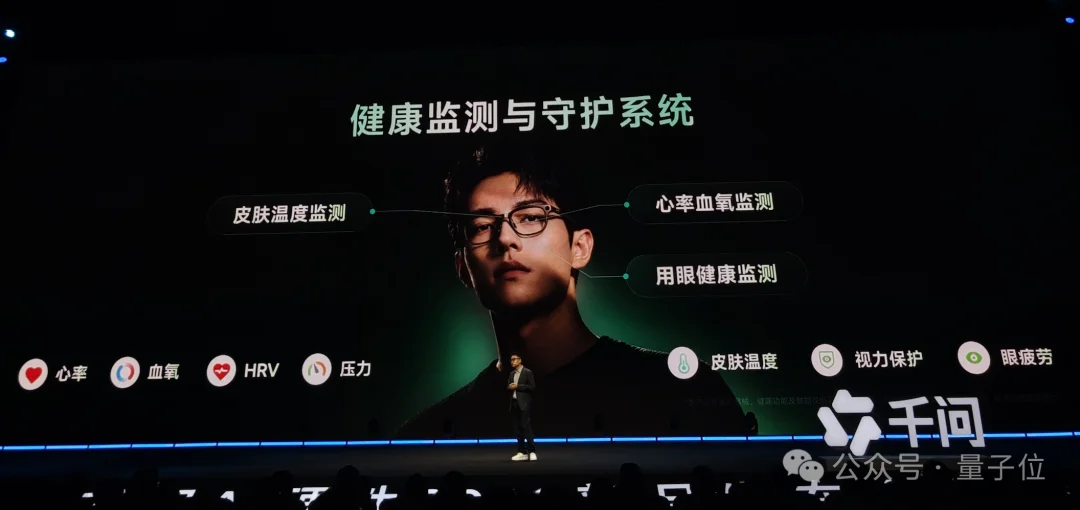
N1 Pro can not only perceive the environment and the user's eyes, but also perform health monitoring.
N1 Pro integrates the PPG sensor into its nose pad and has installed a non-contact temperature measurement sensor on the bridge of the nose. By wearing these glasses, you can continue to monitor your heart rate, blood oxygen levels, HRV (Heart Rate Variability), and body temperature.
However, collecting PPG signals from the nose is much more difficult than from the wrist, as the skin on the nose bridge is thinner, the blood vessels are more delicate, and the stability of the device during wear is lower. Additionally, facial shape, skin tone, the tightness of the device, and movement can all affect the accuracy of the readings.
These problems are solved through the collaborative optimization of optical structures and algorithms.
In addition to vital signs monitoring, the N1 Pro can also take into account your blink frequency, reading distance, and duration to alert you about the health of your eyes.
Unorganized health data is like scattered sand; it is difficult to derive meaningful insights from it. As a result, large-scale health models summarize this accumulated data into health interpretation reports, which include trend analyses and adjustment recommendations.

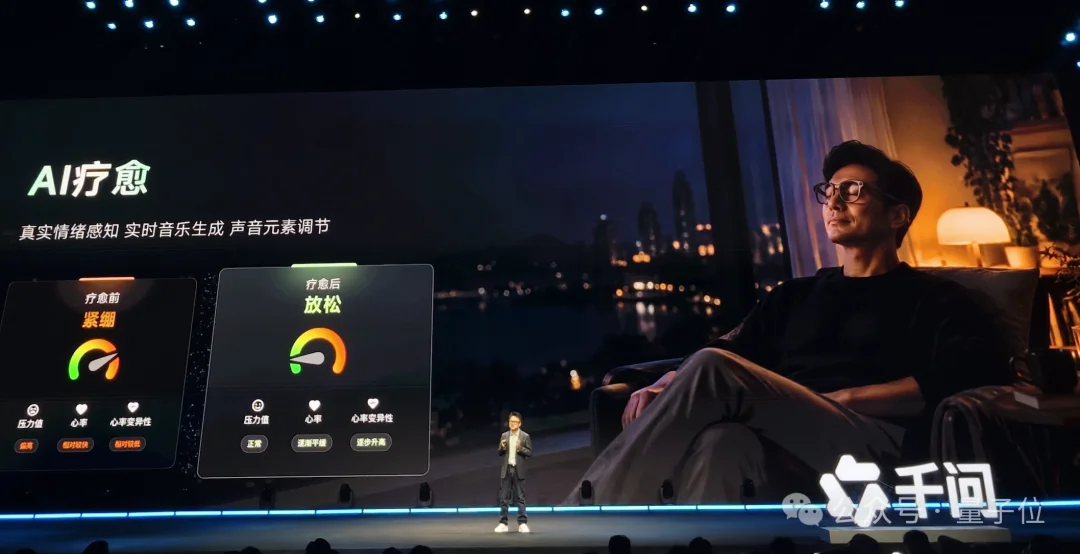
On this basis, Qianwen also added a feature called "AI Healing" to N1 Pro.
This feature will generate a healing music piece in real-time based on your current physical condition. The instruments, rhythm, and tone of the music will be adjusted according to your state.
You can also use voice to fine-tune it; for example, add some rain effects or remove the waves to create a sound scene that reflects your current mood.
Lenses directly output live images; 50 million pixels in resolution.
Having talked so much about AI, let's take a look at N1. The image processing capabilities of Pro.
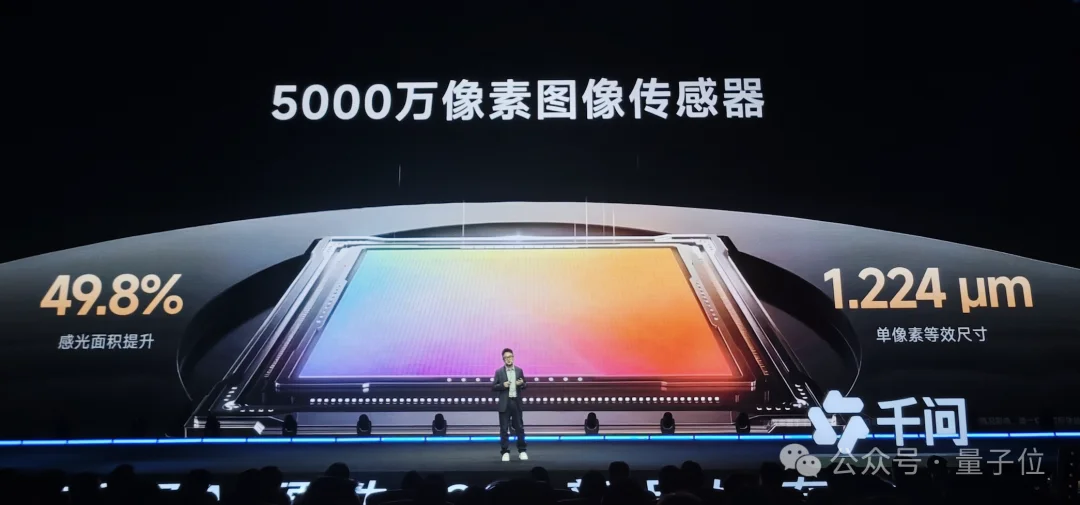
Its sensor has reached a resolution of 50 million pixels, which is quite high for current artificial intelligence glasses.
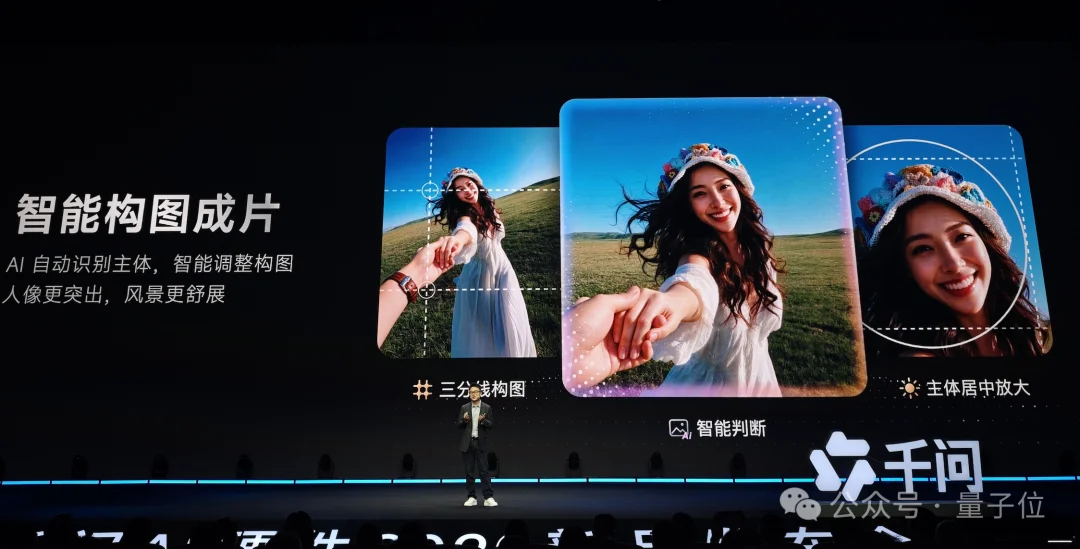
There is a natural issue with shooting from a first-person perspective: you don't have a viewfinder, so you don't know whether the image is distorted during the shooting.
N1 Pro has added an intelligent composition feature to this issue, which will automatically help you cut and correct offset images according to the rules of centering, midline alignment, or subject focus.
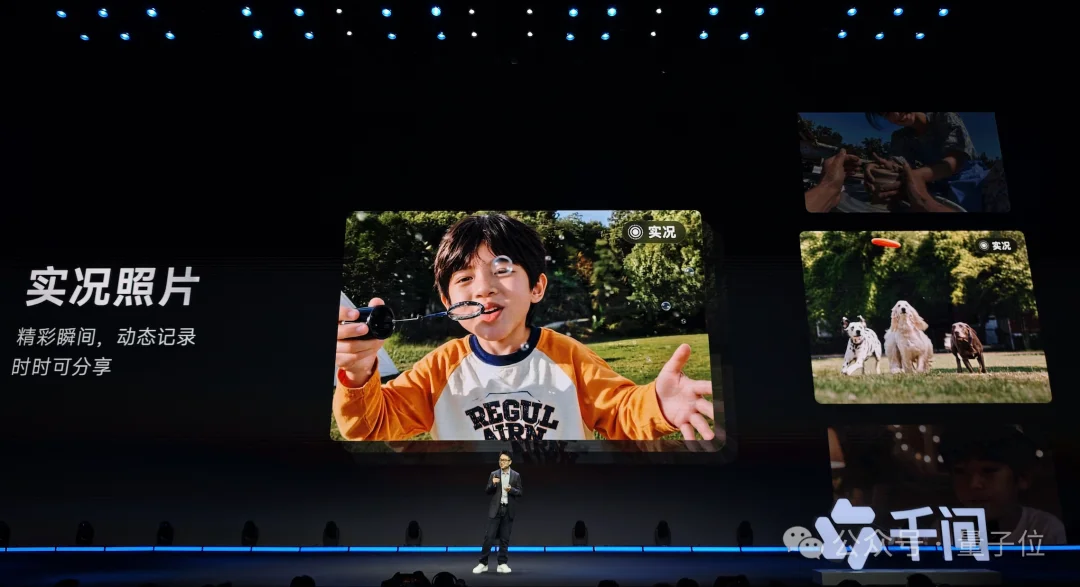
N1 Pro also supports the upload of photos taken on-site.
Sometimes you think what you really want to keep is just a photo. But later on, you realize that what you’re most reluctant to give up are the sounds and moments that happened before and after the photo was taken. The children breathing before they blew the bubbles. The friends laughing as they watched you. The sound of the waves receding…
Static photos only show the results; actual photos capture the process that took place.
N1 allows Pro to increase light intake and signal-to-noise ratio in low-light conditions, through the integration of four different pixels.
The lens uses the 1G5P glass-plastic coupling solution, allowing the video to display 30 frames directly using 4K. In terms of image stabilization, it features EIS (Electronic Image Stabilization) with adaptive stabilization and horizon stabilization.
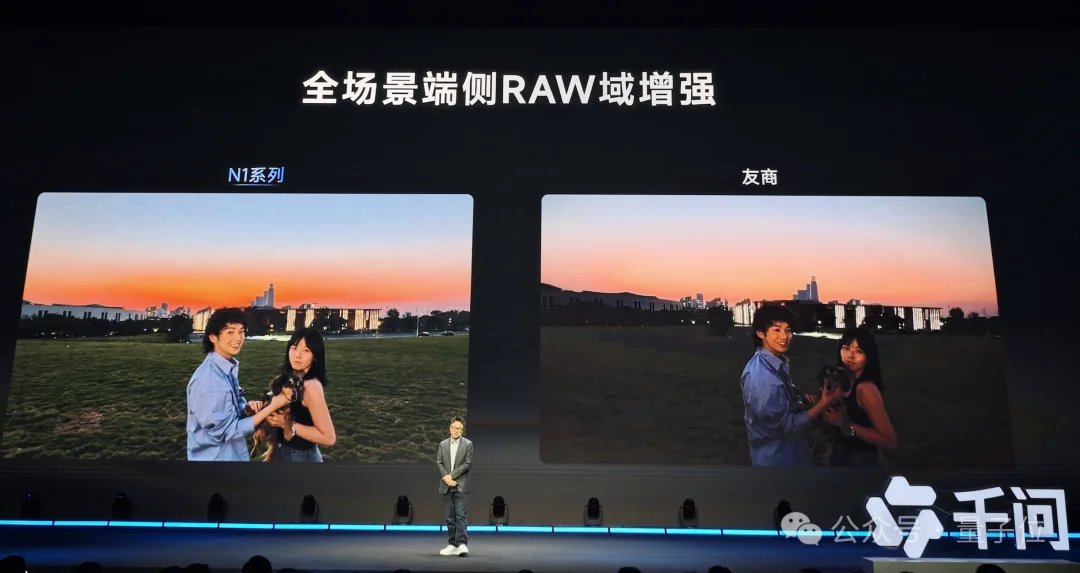
N1 operates at the algorithmic level, enhancing the collaboration between the RAW domain image, mobile devices, and the cloud.
In the past, RAW domain enhancement was generally only used in night mode. N1 Pro has upgraded this feature to be supported by default in all scenarios, allowing for basic RAW domain processing to be performed on the client side.
If you want to further optimize the performance, N1 Pro also offers an "AI Phantom Mode," which utilizes AI rendering and AIGC (Artificial Intelligence Generated Content) capabilities in the cloud to significantly enhance the quality of the materials.
An interesting feature that allows you to interact with images is called the “Artificial Intelligence Inspiration Gallery”.

N1 The Pro’s all-weather perception system will automatically capture various images you encounter throughout the day, such as breakfast scenes, cats by the roadside, or sunsets on your way home. At night, AI will transform these fragments into comic-style collections of images.
Just like a dedicated artist follows you throughout the day, capturing the moments of your life today.
Three chips, a pair of glasses
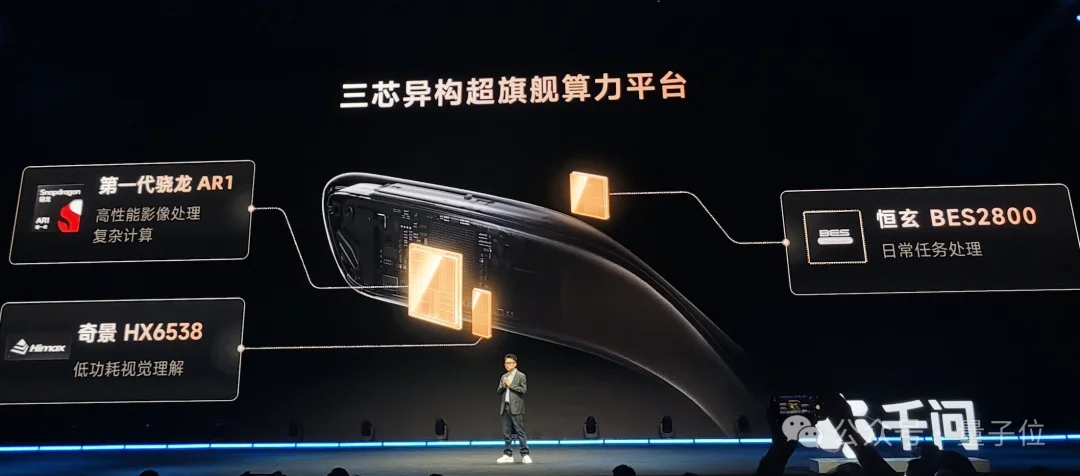
The above functions run simultaneously, with N1 relying on the three-chip heterogeneous system of Pro that is located at the back.
The Snapdragon AR1 is responsible for high-performance image processing and complex calculations, the Hengxuan BES2800 handles routine tasks, and the Qijing HX6538 is in charge of low-power visual understanding.
When the three tasks are separated, they won't drag each other down. When the ability to recalculate is needed, the perception process won't get stuck, and the daily perception operations won't consume too much battery power.
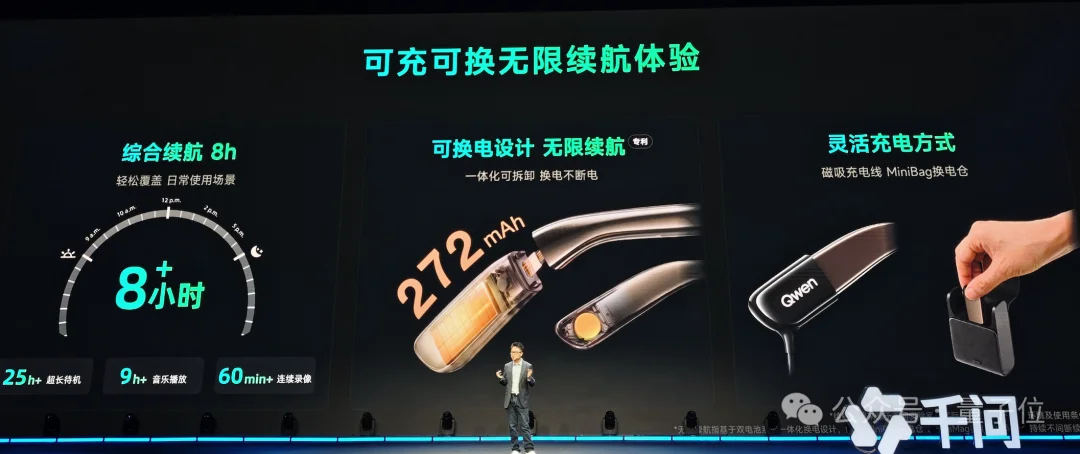
The N1 model comes with a built-in 272 mAh battery. According to official specifications, its total runtime is approximately 8 hours, which should provide enough power for a whole workday.
If you need a longer battery life, the right temple of the glasses supports hot-swappable battery replacement. You can remove the old battery and replace it with a new one without having to take the glasses off. The battery compartment has a capacity of 700 milliampere-hours.
N1 has also released the “Q&A” feature.
Compared to the N1 Pro, this model has removed three functions: eye movement tracking, iris recognition, and health monitoring. However, it still retains features such as a 50-megapixel camera, 4K video streaming, 24/7 perception capabilities, three-chip collaboration, and hot-swappable battery technology. Additionally, it is equipped with a five-microphone audio system along with a VPU (Visual Processing Unit) for enhanced sound quality, as well as full-symmetrical stereo sound.
Due to the absence of a few sets of sensors, the overall durability of N1 is much better than that of N1 by an additional hour.
If you want the core imaging and AI perception capabilities of the N1 Pro, but you don't need eye movement and health monitoring for the time being, the N1 is a more budget-friendly option.
The author comes from “Quantum Bit” and “Krexi”.
Article link:https://airai.cc/en/ai-news/69/
有用吗?